
Blogs • • 19.11.26
What is carbon reporting and how does it work? A guide for UK businesses

Carbon reporting is becoming an important requirement for UK businesses as customers, procurement teams and supply chain partners increasingly request credible emissions data. It turns operational information, such as energy use, fuel consumption and supplier activity, into measurable greenhouse gas emissions across Scope 1, Scope 2 and Scope 3.
This guide explains what carbon reporting is, how it works and what businesses need to consider when collecting, validating and sharing emissions data. It also explores reporting requirements, supply chain challenges and supplier engagement, helping organisations improve carbon visibility and respond more confidently to growing reporting and procurement expectations.
What is carbon reporting?
Carbon reporting is the process of measuring, calculating and communicating the greenhouse gas emissions associated with an organisation’s activities. It helps businesses understand their emissions and share carbon data with customers, procurement teams and supply chain partners.
Carbon reporting converts operational information into emissions data that can be measured and reported consistently. Emissions are typically categorised into:
- Scope 1: Direct emissions from owned or controlled sources.
- Scope 2: Emissions associated with purchased energy.
- Scope 3: Indirect emissions generated throughout the value chain.
For many UK businesses, carbon reporting has become an increasingly important commercial requirement. Organisations are often asked to provide emissions data as part of procurement processes, tender submissions and supply chain reporting programmes.
A particular area of focus is Scope 3 emissions reporting. These emissions occur across the supply chain and can include activities undertaken by suppliers, contractors, transport providers and other third parties. Because much of this information sits outside an organisation’s direct control, collecting reliable emissions data can be challenging.
This guide explains how carbon reporting works, why it matters and how Scope 1, Scope 2 and Scope 3 emissions are reported. It also explores supply chain carbon reporting, supplier engagement, reporting requirements, procurement expectations and the challenges organisations face when collecting, validating and sharing carbon data.
Why is carbon reporting important?
Carbon reporting is no longer limited to large organisations. Across the UK, businesses of all sizes are increasingly being asked to measure and share emissions data by customers, procurement teams and supply chain partners.
Several factors are driving this shift:
Supply chain reporting requirements – Organisations need emissions data from suppliers to better understand emissions across their value chain, particularly Scope 3 emissions.
Regulatory obligations – Reporting frameworks and disclosure requirements are increasing demand for reliable emissions information throughout supply chains.
Procurement expectations – Carbon reporting is becoming more common within tenders, supplier assessments and contract renewals.
Data transparency – Organisations want a clearer understanding of emissions associated with the products and services they buy.
As a result, many suppliers and contractors are now expected to provide carbon information, even when they are not legally required to publish emissions data themselves.
Businesses that can measure and share carbon data are often better prepared to respond to customer requests, support procurement requirements and participate in supply chain reporting programmes. Equally, organisations collecting supplier emissions data can build a more complete picture of emissions across their operations and supply chain.
Carbon reporting therefore plays an important role in improving transparency, supporting reporting requirements and helping organisations communicate emissions information in a consistent and credible format.
How carbon reporting works
While carbon reporting methodologies can vary between organisations, most reporting processes follow a similar journey from data collection through to validation and reporting. The SafePlanet approval process shown below provides an example of how organisations can measure, review and validate their carbon emissions data.
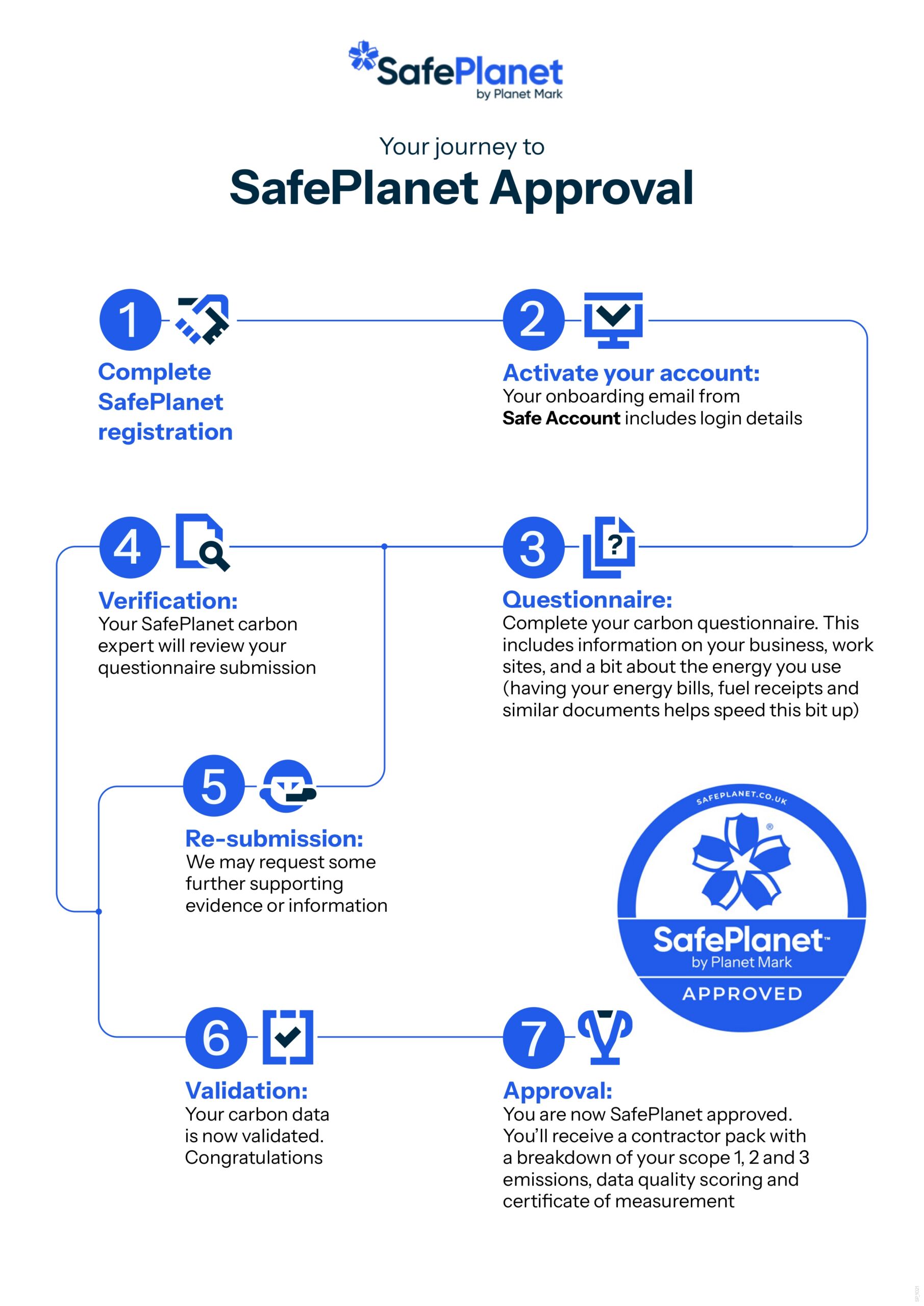
The process begins with registration and onboarding, followed by the completion of a carbon questionnaire. Organisations provide information about their business activities, sites and energy consumption, along with supporting evidence such as energy bills, fuel records and other relevant documentation.
This information is then reviewed to calculate the organisation’s carbon footprint. Emissions are measured using recognised methodologies and categorised across Scope 1, Scope 2 and Scope 3 emissions where applicable.
Before results are finalised, the submitted information undergoes a verification process to assess completeness and accuracy. Additional evidence may be requested if further clarification is needed. This review stage helps improve data quality and ensures emissions have been calculated using a consistent approach.
Once the review is complete, the carbon data is validated and reporting outputs can be produced. These outputs typically include emissions data, methodology information and supporting documentation that can be shared with customers, procurement teams and supply chain partners.
As demand for carbon information continues to grow, validation plays an increasingly important role in helping organisations demonstrate confidence in the emissions data they provide.
Scope 1, 2 and 3 emissions explained
Carbon reporting is organised around three emissions categories defined by the Greenhouse Gas Protocol. The diagram below provides an overview of how these emissions are classified across an organisation’s operations and value chain.
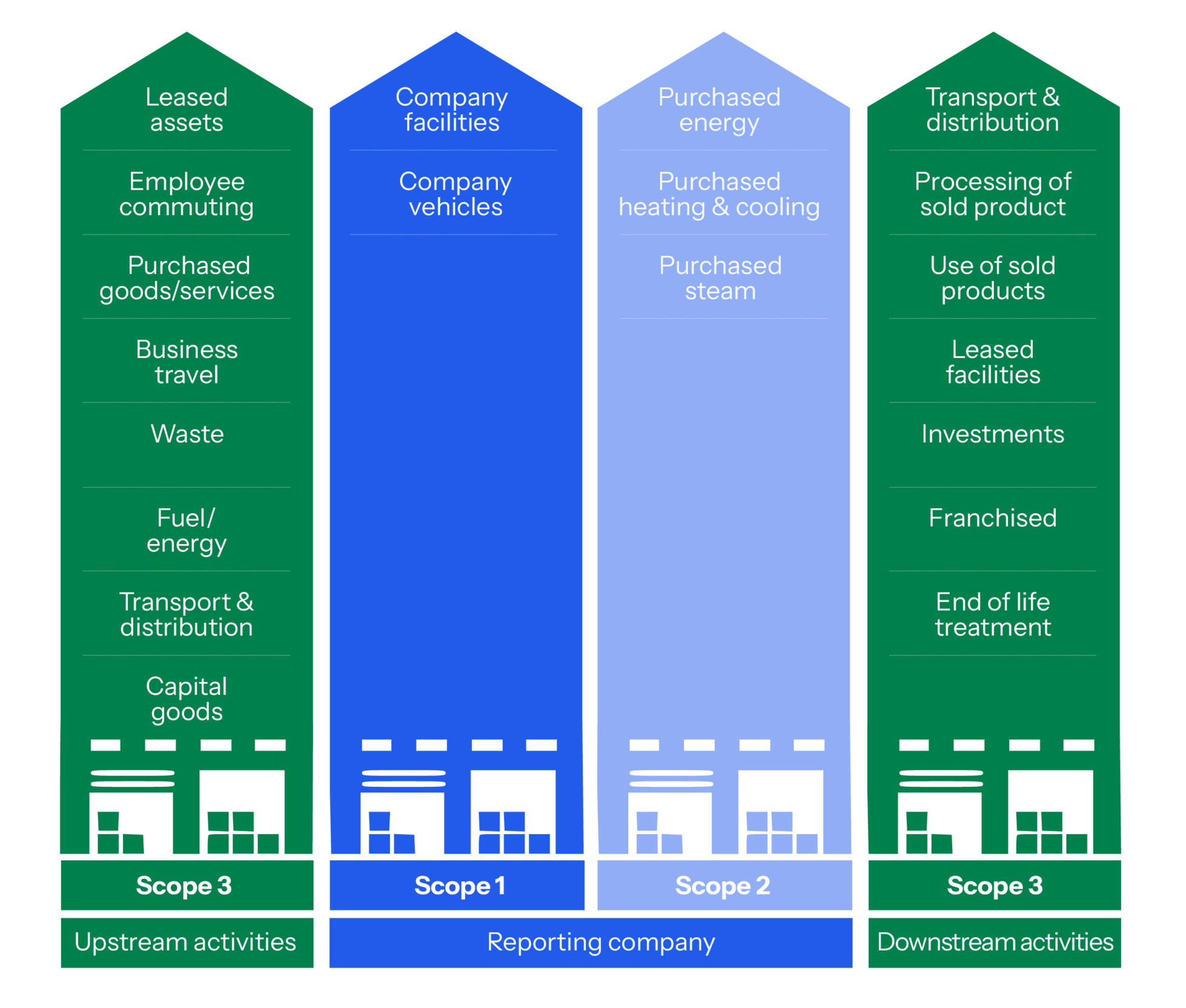
- Scope 1 emissions are direct emissions from sources owned or controlled by the organisation, such as company vehicles, gas boilers and on-site equipment.
- Scope 2 emissions are indirect emissions associated with purchased energy, including electricity used to power offices, facilities and operational sites.
- Scope 3 emissions are all other indirect emissions that occur throughout the value chain. These can include purchased goods and services, business travel, transportation, waste and supplier activities.
For many organisations, Scope 3 emissions represent the largest proportion of their carbon footprint. However, they are often the most difficult to measure because the required data sits with suppliers and other third parties. This is one of the main reasons why supply chain carbon reporting has become such an important focus for businesses.
For a deeper dive into Scope 3 reporting, read what Scope 3 carbon reporting is and why it matters. You can also explore our guide to Scope 1, Scope 2 and Scope 3 emissions for further detail.
Scope 3 emissions reporting
Scope 3 emissions reporting focuses on emissions generated throughout an organisation’s value chain, including supplier, contractor and service provider activities. Because these emissions occur outside an organisation’s direct control, they are often the most challenging part of carbon reporting.
Collecting and managing Scope 3 data can be difficult due to several common challenges:
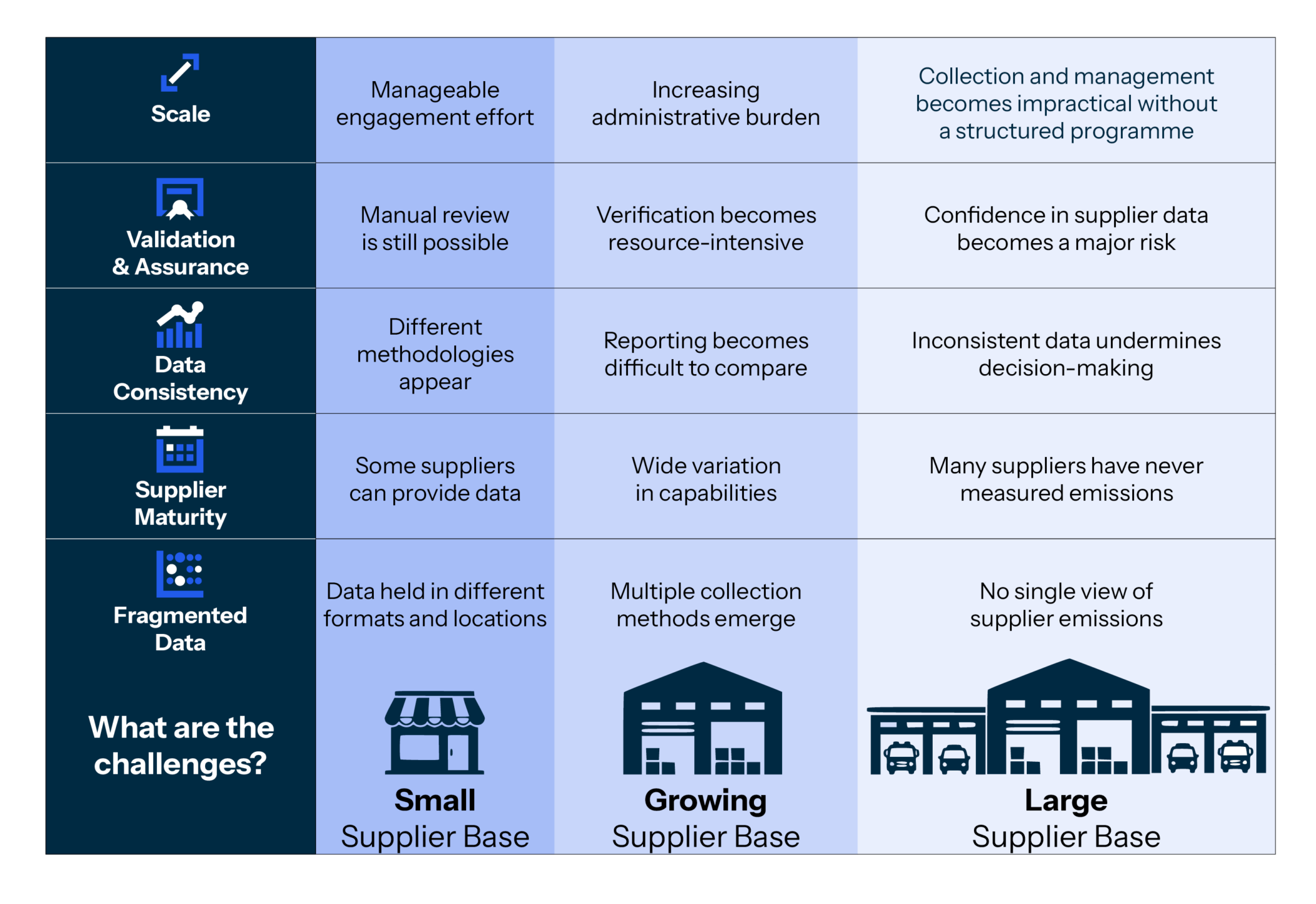
These challenges are one of the main reasons why supply chain carbon reporting has become such a significant focus. Organisations increasingly need reliable supplier emissions data to support reporting requirements, procurement decisions and stakeholder expectations.
A structured approach to collecting, validating and sharing carbon data helps improve consistency across supplier networks, creating greater transparency and supporting more reliable Scope 3 emissions reporting.
Carbon reporting for supply chains
Carbon reporting has expanded beyond an organisation’s own operations and become an important supply chain requirement. Many organisations now need emissions data from suppliers, contractors and service providers to understand the full impact of their activities, particularly when reporting Scope 3 emissions.
For many businesses, a significant proportion of emissions sit outside their direct control and are linked to:
- Purchased goods and services
- Transportation and logistics
- Outsourced activities
- Supplier operations
This creates several challenges. Suppliers often vary in size, resources and carbon reporting experience, which can lead to:
- Inconsistent data quality
- Gaps in reporting
- Different reporting methodologies
- Difficulties comparing emissions data across suppliers
Effective supply chain carbon reporting relies on supplier participation. If reporting processes are overly complex, engagement can decline, reducing the quality and completeness of the data collected. Organisations therefore need reporting approaches that are accessible for suppliers while still producing credible and usable emissions information.
As reporting expectations continue to grow, the ability to collect, validate and share carbon data consistently is becoming increasingly important. Reliable supplier emissions data helps organisations improve transparency across their supply chain, support reporting requirements and build a more complete understanding of emissions throughout their value chain.
Supplier engagement and data quality
Supplier engagement plays a critical role in the success of carbon reporting programmes. Even the most robust reporting framework will struggle to produce reliable results if suppliers do not understand what information is required or how to provide it.
Supply chains often include organisations with different levels of carbon reporting experience. Some suppliers may already have established reporting processes, while others may be measuring emissions for the first time. This can create challenges such as:
- Incomplete emissions data
- Inconsistent reporting methodologies
- Varying levels of data quality
- Difficulties comparing supplier information
Clear communication is essential. Suppliers are more likely to participate when reporting requirements are explained clearly and supported by practical guidance. Providing a structured reporting process can help improve consistency and reduce confusion.
Validation is equally important. Reviewing submitted information helps identify gaps, anomalies and potential inaccuracies before data is incorporated into wider reporting. This increases confidence that emissions data has been collected and reported using a recognised and consistent methodology.
Improving data quality is rarely a one-time exercise. As suppliers become more familiar with reporting requirements, the completeness and consistency of the information they provide often improves over time.
Organisations that support supplier participation, maintain clear reporting processes and validate submitted data are generally better positioned to collect reliable carbon information at scale, creating greater confidence in supply chain emissions reporting.
Carbon reporting requirements and regulations
Carbon reporting requirements in the UK are influenced by legislation, public sector procurement rules and growing supply chain expectations.
One of the most established frameworks is Streamlined Energy and Carbon Reporting (SECR), which requires certain large UK organisations to disclose energy use and carbon emissions as part of their annual reporting obligations. While many SMEs fall outside the scope of SECR, they may still be asked to provide emissions data to customers that are subject to reporting requirements.
Public sector procurement has also increased demand for carbon reporting. Procurement Policy Note 06/21 (PPN 06/21) introduced carbon-related requirements for certain suppliers bidding for central government contracts, reinforcing the need for organisations to understand and communicate their carbon footprint.
Today, carbon reporting requirements are often driven by a combination of:
- Regulatory reporting obligations
- Public sector procurement requirements
- Supplier onboarding processes
- Tender and contract renewal requirements
- Supply chain reporting programmes
As organisations seek greater visibility into supply chain emissions, requests for carbon data are extending beyond businesses that have a direct legal obligation to report. Suppliers, contractors and SMEs are increasingly being asked to provide emissions information to support customer reporting requirements and wider Scope 3 reporting activities.
Understanding these requirements can help organisations prepare for carbon reporting requests and respond more effectively to customer and procurement expectations.
What is SECR?
Streamlined Energy and Carbon Reporting (SECR) is a UK framework that requires certain organisations to report energy use and carbon emissions within their annual reports. Its purpose is to improve transparency and provide more consistent reporting of emissions data.
A common misconception is that SECR applies to all businesses. In reality, it applies only to certain quoted companies and large unquoted companies and limited liability partnerships that meet specific eligibility criteria. Many SMEs, contractors and smaller suppliers are therefore outside the legal scope of SECR.
However, this does not mean smaller businesses are unaffected. Organisations that must comply with SECR often need emissions data from suppliers to support wider reporting activities and improve their understanding of supply chain emissions.
As a result, businesses that are not legally required to report under SECR may still receive requests for carbon information as part of:
- Supplier onboarding
- Tender submissions
- Contract renewals
- Customer reporting programmes
Understanding SECR helps explain why demand for carbon data continues to grow throughout supply chains. While the legal obligation may sit with larger organisations, the need for supplier emissions data often extends reporting expectations to contractors, suppliers and SMEs that support those organisations.
Carbon reporting standards and frameworks
A range of standards and frameworks help organisations measure, report and communicate carbon emissions consistently. While not every business is required to follow all of them, they often influence customer expectations and reporting requirements throughout the supply chain.
Key frameworks include:
GHG Protocol
The most widely recognised framework for carbon accounting. It establishes the Scope 1, Scope 2 and Scope 3 emissions categories used by organisations globally.
SECR (Streamlined Energy and Carbon Reporting)
A UK reporting framework requiring certain large organisations to disclose energy use and carbon emissions within their annual reports.
TCFD (Task Force on Climate-related Financial Disclosures)
A framework designed to improve reporting of climate-related risks and opportunities.
IFRS Sustainability Disclosure Standards
International standards that aim to improve consistency and comparability in sustainability and climate-related disclosures.
For many SMEs and suppliers, these frameworks may not apply directly. However, they often shape the reporting obligations of larger organisations, which in turn can create demand for carbon data throughout the supply chain.
Understanding these frameworks can help organisations make sense of reporting requests, procurement requirements and the growing need for consistent carbon emissions data.
Carbon reporting for tenders and procurement
Carbon reporting is becoming an increasingly important part of procurement and tendering processes across both the public and private sectors. Buyers often request information about a supplier’s carbon emissions, carbon measurement activities or reporting capabilities to support their own reporting obligations and gain greater visibility into supply chain emissions.
This is particularly common in sectors where supply chain emissions form a significant proportion of an organisation’s overall carbon footprint. In these cases, supplier emissions data can play an important role in supporting Scope 3 reporting requirements.
For suppliers, the ability to provide carbon information can help streamline procurement discussions and reduce delays when responding to tenders, supplier assessments and contract renewals. Organisations that have already measured their emissions and can share credible carbon data are often better prepared to meet these requirements.
Procurement expectations vary between organisations. Some buyers may request basic emissions information, while others require more detailed data or evidence of an established reporting process. As reporting expectations continue to grow, suppliers are increasingly expected to understand their emissions and provide carbon information in a consistent and credible format.
Benefits of carbon reporting for UK businesses
Carbon reporting provides organisations with a structured way to collect, manage and communicate emissions data. While reporting requirements are often driven by customers, procurement teams and supply chain expectations, a consistent reporting process can deliver several practical benefits.
One of the most significant benefits is improved visibility. By collecting emissions data in a structured way, organisations can build a clearer understanding of emissions across their operations and supply chain activities.
Carbon reporting also improves reporting confidence. Businesses that have measured their emissions using a recognised methodology and can provide validated carbon data are often better prepared to respond to customer requests, supplier assessments and reporting requirements.
In procurement, credible emissions information can help organisations respond more efficiently to tender requirements, contract renewals and supplier evaluations. Structured reporting programmes can also support supplier engagement by improving the consistency and quality of emissions data collected across the supply chain.
Finally, carbon reporting supports audit readiness and data quality. Maintaining organised records, documented methodologies and validated reporting outputs makes it easier to demonstrate how emissions data has been collected and reported. This helps build confidence among customers, procurement teams and other stakeholders who rely on the information.